

A lawyer’s expertise is built over years of studying legislation, interpreting judgments, understanding precedents, and working through complex legal matters.
But how much of that expertise comes across on LinkedIn?…For many legal professionals, posting usually means sharing a new judgment, announcing a professional milestone, or resharing an article about a legal development.
There’s much more they can talk about.
LinkedIn gives legal professionals an opportunity to make their knowledge accessible, contribute to industry conversations, and establish a recognisable professional voice. This is an important part of personal branding for lawyers.
The challenge is finding content that demonstrates legal expertise without turning every post into a case summary or a legal lecture.
Here are eight LinkedIn content ideas for lawyers to explore.
1. Explain What a New Judgment Means Beyond the Headlines

A Supreme Court judgment makes the news. Several legal publications summarise it. But what does it actually change?
This is where a legal professional can add value.
Instead of simply sharing the judgment and listing its key observations, explain its implications. This is where lawyers can create meaningful legal content on LinkedIn.
Consider:
- What legal position existed before the judgment?
- What has the court clarified or changed?
- Which industries, businesses or individuals could be affected?
- What questions remain unanswered?
For example, a lawyer working in employment law could explain how a new ruling affects the way organisations approach workplace policies.
The objective is to help readers understand the significance of a judgment, not simply know that it was delivered.
2. Decode the Fine Print That People Often Overlook

Contracts, agreements, and legal documents contain clauses that can have significant consequences but are rarely discussed outside legal circles. Pick one clause and explain what it actually means.
For example:
- What does an indemnity clause protect against?
- What happens when a contract has an automatic renewal clause?
- What is the difference between arbitration and litigation?
- Why does a limitation of liability clause matter?
You could create a recurring series such as The Clause Nobody Reads. Each post can introduce a clause, explain its purpose, and highlight the questions someone should consider before agreeing to it.
This makes legal knowledge useful to founders, business owners and professionals who regularly deal with contracts. It also gives lawyers practical LinkedIn post ideas that demonstrate their expertise.
3. Explore Where Law Meets Business

Law doesn’t operate separately from business. Changes in legislation, regulatory requirements, and court decisions can influence how companies hire, invest, operate, and expand. Use this intersection to create content.
For example:
- An intellectual property lawyer could discuss how trademark protection affects a startup entering a new market.
- A corporate lawyer could explain the legal considerations involved in a merger.
- A labour law professional could discuss how changes in employment regulations affect HR policies.
- A data privacy professional could explore what new compliance requirements mean for businesses collecting customer information.
Don’t stop at explaining the legal provision. Connect it to the business decision it influences. This also helps your content reach people beyond the legal profession.
4. Challenge Common Misconceptions About the Law
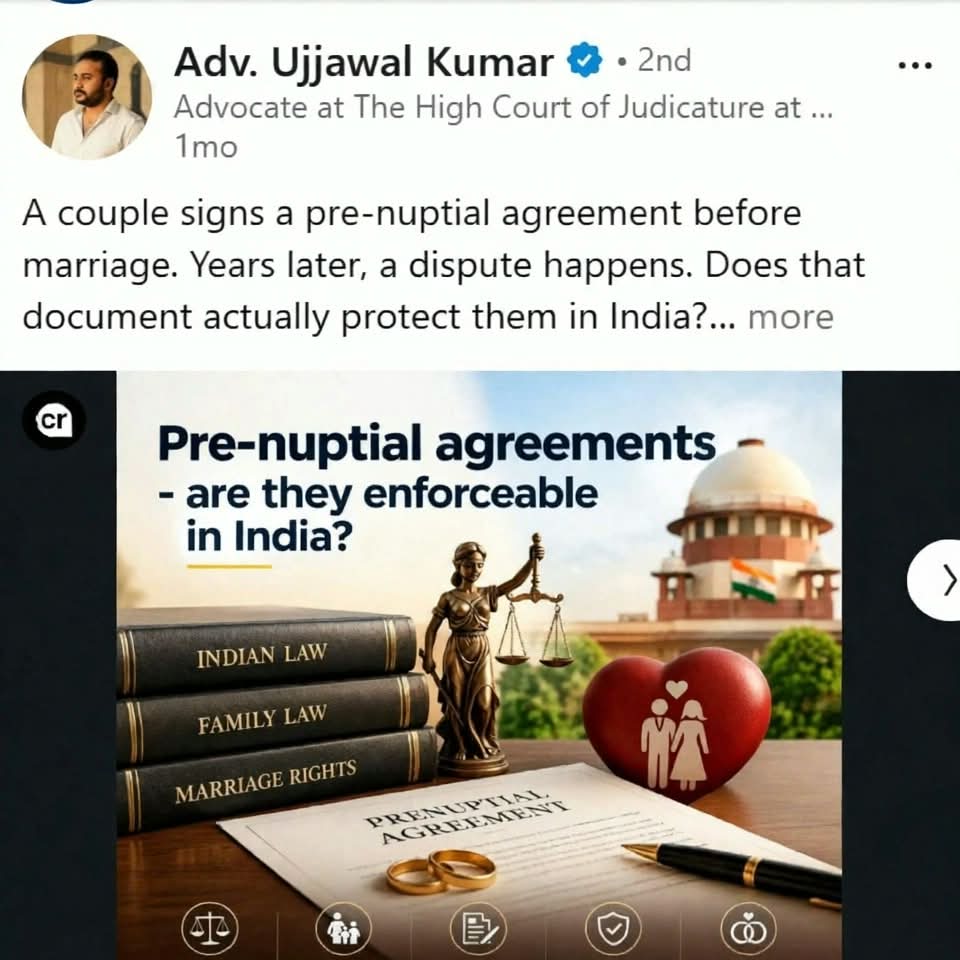
There are plenty of legal assumptions people make without checking whether they’re actually correct. These misconceptions make interesting educational content.
For example:
- Does registering a company automatically protect its brand name?
- Can an employer terminate an employee without notice?
- Is every agreement signed between two parties legally enforceable?
- Does having a copyright automatically protect every use of a creative work?
Pick one misconception, explain why people believe it, and clarify what the law actually says.
Be careful not to turn complex legal questions into misleading yes-or-no answers. Explain the relevant conditions and exceptions.
The aim is to replace assumptions with a better understanding of the law. Sharing these perspectives consistently can strengthen a lawyer’s personal brand on LinkedIn.
5. Break Down a Legal Process People Find Intimidating
Legal processes can seem complicated to someone who has never experienced them. A simple explanation of how something works can be extremely useful.
Consider topics such as:
- What happens after a company receives a legal notice?
- What are the stages involved in registering a trademark?
- How does arbitration generally work?
- What happens during the due diligence process before an acquisition?
- What are the stages involved in filing a patent application?
You could use a carousel to explain the process step by step, with one stage on each slide. Avoid presenting general information as a substitute for advice on an individual’s circumstances. Focus on explaining the process and the factors that may affect it.
This approach also makes complex subjects easier to communicate through LinkedIn content creation.
6. Discuss Legal Developments That Are Flying Under the Radar
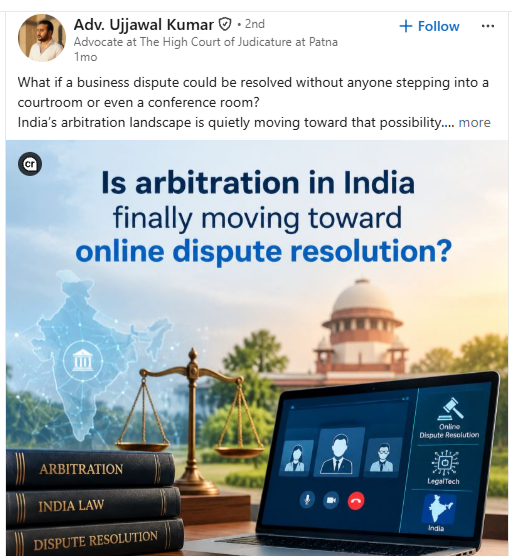
Not every important legal development becomes a major headline. Some changes in regulatory frameworks, policy updates, tribunal decisions, and industry-specific requirements deserve more attention than they receive. Make these developments easier for your audience to follow.
For example, a competition law professional could discuss a regulatory development affecting digital platforms. An environmental law professional could explain a new compliance requirement for businesses.
You can also create a recurring series around developments in your practice area.
Instead of simply reposting legal news, explain why the development deserves attention and who should be following it.
7. Discuss the Questions Your Industry Should Be Asking
Legal professionals often have perspectives that come from understanding how legislation works alongside business realities. Use LinkedIn to contribute to larger professional discussions.
For example:
- Is India’s current approach to data privacy keeping pace with AI development?
- Are businesses adequately prepared for changes in employment regulations?
- How should companies approach intellectual property ownership when using generative AI?
- Are traditional contract structures equipped to handle emerging business models?
These posts don’t have to provide definitive answers. You can present the issue, explain the competing considerations, and share a reasoned perspective.
The quality of your analysis is what makes the discussion valuable.
8. Build a Professional Voice Beyond Legal Updates

Your LinkedIn presence shouldn’t be limited to explaining legislation and judgments. People can also learn about the way you approach your profession.
You could write about:
- A legal principle that has changed the way you interpret a particular issue.
- A book, research paper, or academic discussion that challenged your thinking.
- How technology is changing legal research and documentation.
- The importance of clear communication between legal teams and business teams.
- What young professionals should understand about a particular area of legal practice.
For example, an in-house counsel could discuss why involving the legal team early in a business decision is often more effective than bringing them in after the decision has been made.
These posts help readers understand your professional philosophy, not just your subject knowledge.
Your Legal Knowledge Deserves a Wider Audience
Building a professional presence on LinkedIn doesn’t mean turning your legal practice into a content channel. It means making your knowledge, analysis, and professional perspective accessible to the people who can benefit from it.
At Branding Over Coffee, we help professionals build a LinkedIn personal brand around their expertise, develop distinctive content pillars, and establish a consistent professional voice.
If you’re a legal professional looking to build a more thoughtful LinkedIn presence, book a discovery call with us.